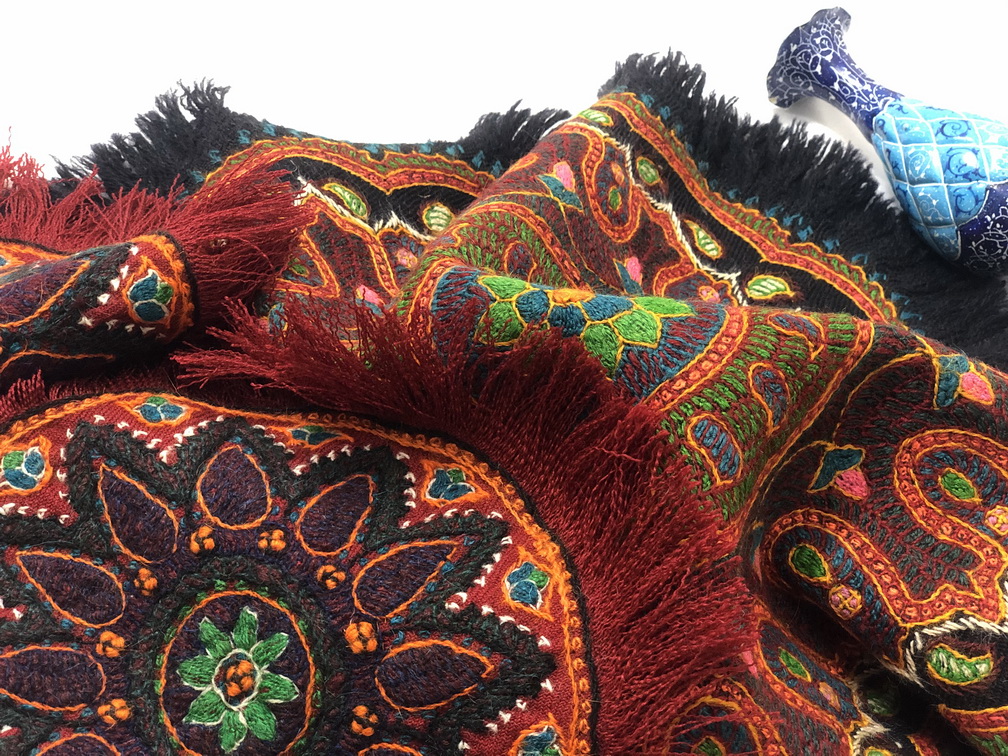
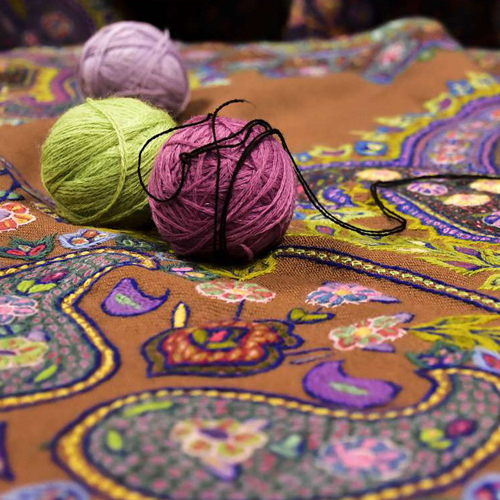
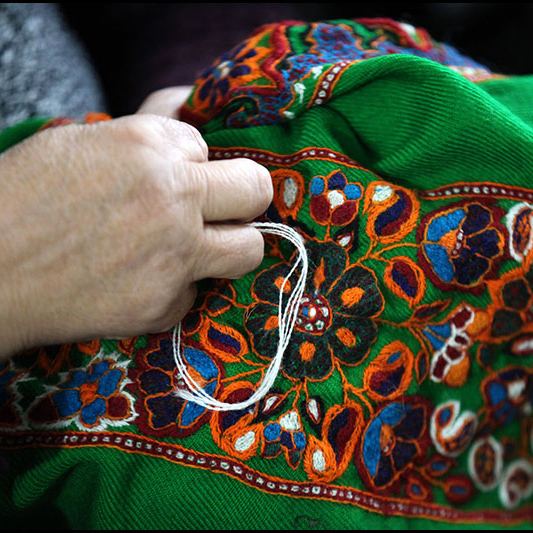
Pateh Needlework with an estimated age of 300 years was originally developed in Kerman Province, Iran. It is mainly produced by women as a side income for the families. Pateh is normally a large piece of fabric called “Ariz” that is beautifully decorated with meaningful patterns using threads or “Rees”. Ariz and threads are normally made of wool and are dyed using the traditional Persian dying method. The dyes are natural and made of herbs, husks, fruits and vegetables. However, some of the more expensive Pateh pieces are made of Silk. “Rees” or threads colors vary from maroon, red, and black to cream.
Ariz is being used in making clothes, accessories and home decors.
Pateh Patterns are vibrant, traditional and symbolic; Persian Pre-Islamic symbols play a major role in a Pateh piece. Patterns such as Paisley, Toranj, Flower bouquets, Mehrab (Arch) and other contemporary designs that newer generations incorporate into their artworks. Pateh pieces have frames or margin that are decorated within. The artists’ imagination can wander and create the Pateh piece as she wishes.
Pateh’s motifs are curvier than the other needleworks, the technique used in Pateh lets the artists play comfortably with the threads. The use of plants, flowers and petals are dominant in Pateh works.
Navigating through all these patterns is no easy job due to the sheer number of them, but let’s take a shallow dive into the fascinating stories of some of the more widely used ones. The stories that can give more depth and meaning to your chosen piece.
Plants patterns: The most dominant patterns in Pateh are based on plants, flowers and trees. Pateh artist are in love with nature.
Some of the Plants patterns are:
• Derakhti : Means tree, it is a full tree, that is called “tree of life”. It starts from the trunk and ends with leaves and branches. Amongst the branches, flowers, birds and other beautiful patterns are added by the artists. • Badami: Almond or the bent Cedar tree
• Ghahr-o-Ashti: Two back to back patterns that are used on the edges.
• Mother and child: It is normally the centerpiece and consists of a big pattern with 2 small ones on the side. It represents maternity and motherhood.
Geometric patterns • Bazoo band: delicates diamond shapes mainly used on the edges. • Sleseleh: a series of similar patterns. • Toranj: Interlocking geometric patterns
Birds Such as peacock, nintingel or parrots.
Inscriptions Mehrab: the symbol of prayer.
Now, that these little lines and shapes have evolved into more meaningful stories, your journey into the realm of Pateh Needleworks is directed towards the point where your inner desires and Pateh patterns’ stories meet.
Whether it is a standout outfit or a little gift for a loved one; we believe the only way to share stories is to integrate them into our day-to-day lives. We find it entertaining when these patterns can impress an absolute stranger and open doors for meaningful conversations around culture, history, art and local community support; try it; you will understand and love what we are talking about.Come on, navigate our range and indulge your thirst for beauty.